

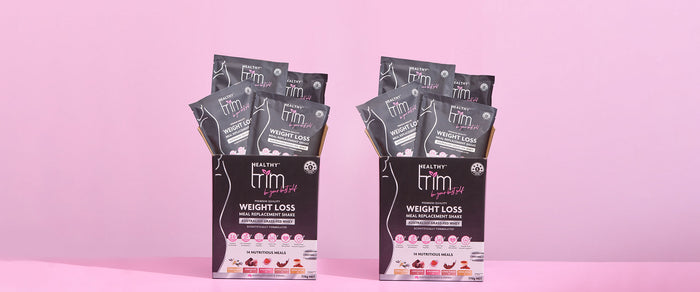



Meal replacement shakes have exploded in popularity. Convenient, quick and marketed as a simple way to hit your nutrition goals. But not all shakes are created equal and the difference often comes down to something most of us skip entirely: the ingredients label.
If you've ever flipped a shake packet around and felt genuinely confused by the wall of text on the back, you're not alone. Between scientific-sounding additive names, vague marketing claims on the front and sugar hidden under a dozen different names, it's easy to end up with a product that looks healthy but isn't doing what you think it is.
This guide breaks down exactly what to look for and what to avoid so you can make an informed choice, whichever brand you end up choosing.
A meal replacement shake isn't a snack or a supplement on the side, by definition, it's standing in for an entire meal's worth of nutrition. That's a much bigger job than a protein shake or a green powder and it means the ingredient quality matters more, not less.
In Australia, a product can only legally be called a "meal replacement" if it meets strict requirements under the Food Standards Code (Standard 2.9.3), covering minimum protein, vitamins, minerals and energy content. But meeting the legal minimum and being genuinely well-formulated for your health are two different things plenty of products tick the compliance boxes while still leaning heavily on cheap fillers, added sugars, or low-quality protein sources to get there.
That's exactly why learning to read the label yourself is worth the five extra minutes.
Protein is usually the headline ingredient on the front of the pack, but the source and quality of that protein varies enormously between brands.
What to look for:
What to watch for:
Our shakes use 31g of Australian WPC80 whey protein per serve, see our full ingredient breakdown here.
This is where labels get genuinely tricky, because sugar hides under a long list of names: dextrose, maltodextrin, fructose, corn syrup solids, cane sugar, and more. A product can list "no added sugar" on the front while still containing several of these further down the ingredients list.
What to look for:
What to watch for:
Not all thickening or texture agents are a problem. Some (like natural fibres) genuinely support digestion. But many mass-market shakes lean on cheap bulking agents purely to increase volume and shelf stability, without adding nutritional value.
Common filler ingredients to be aware of:
If a label has more filler and additive names than actual nutritional ingredients, that's worth noticing.
This is an area where genuinely well-formulated shakes distinguish themselves from the pack. A meal replacement asks your digestive system to process something quite different from a normal meal, so digestive support ingredients aren't just a nice-to-have, they can meaningfully affect how the product actually makes you feel.
What to look for:
Why this matters: many people who say a meal replacement shake "doesn't agree with them" are actually reacting to a lack of digestive support ingredients, not the core protein itself. Bloating, discomfort, or heaviness after a shake is often a formulation issue, not something you should assume you have to live with.
Because a meal replacement is standing in for real food, it should be nutritionally complete, not just high in protein. Look for a reasonably comprehensive spread of essential vitamins and minerals on the nutrition panel, not just a token handful.
A genuinely complete formulation will typically include contributions toward your daily requirements across the B vitamins, vitamin D, calcium, magnesium, zinc, and iron, among others, not just a couple of headline nutrients used for front-of-pack marketing.
Finally, scan for:
None of these are necessarily dangerous in small amounts, but if you're paying a premium for a "health" product, it's reasonable to expect a shorter, cleaner ingredients list than a supermarket snack food.
✓ 25g+ of a named, high-quality protein source (WPC80, WPI, or similar)
✓ Natural sweeteners only (monk fruit, stevia) no maltodextrin or refined sugar
✓ Named prebiotic and probiotic strains, not vague "blends"
✓ Digestive enzymes to support absorption and reduce bloating
✓ A broad, genuine spread of essential vitamins and minerals
✓ No artificial colours or flavours
✓ Minimal, recognisable filler ingredients
✓ Compliant with FSANZ's Formulated Meal Replacement standard (Standard 2.9.3), not just marketed loosely as "meal replacement"
This is exactly the standard we formulated Healthy Trim to. See our full ingredient breakdown here in the nutrition and ingredients drop down arrows.
No. Only products that meet Standard 2.9.3 of the Food Standards Code can legally be labelled a "meal replacement." Many protein shakes and supplement-style products use similar marketing language without meeting these specific nutritional requirements, it's worth checking whether a product is actually classified as a meal replacement or simply a protein supplement.
This usually comes down to formulation, not the concept of meal replacement shakes generally. Products without digestive enzymes, prebiotic fibre, or probiotic support ask more of your digestive system without helping it along, which is a common cause of discomfort. Products with these ingredients specifically included tend to be better tolerated.
Not automatically, but price differences in this category often do reflect real formulation differences: higher-quality protein sourcing, natural rather than artificial sweeteners, and functional digestive ingredients all cost more to include than their cheaper alternatives. The label is the best way to verify whether a higher price is actually reflected in the ingredients, rather than just assuming it.
Reading a meal replacement shake label properly takes a couple of minutes, but it tells you far more than any front-of-pack marketing claim. Look past the headline protein number and check the sweetener, the filler content and whether there's genuine digestive support, that's where the real quality difference lives.
Curious what's actually in Healthy Trim? Explore our full ingredient breakdown or try our Sample Pack to see (and taste) the difference for yourself.





Your cart is currently empty.