




Protein plays a role in nearly every function in your body - from building muscle to fighting infection to producing hormones. Getting enough matters, and it's one of the reasons every Healthy Trim shake delivers 31.5g of premium Australian grass-fed whey protein in a single serve. In this article, we'll break down exactly what protein does in the body and how much you actually need.
In this blog, we will discuss the importance of protein in the body and how it can keep you healthy and help you lose weight.
Protein makes up the enzymes that generate many chemical reactions and hemoglobin in the blood that carries oxygen. There are over 10,000 different proteins found in the human body, helping it to function correctly.
Proteins are made up of over twenty amino acids, which are the basic building blocks of the body. The body does not store amino acids - it generates them either from scratch or by modifying other amino acids.
Nine of the essential amino acids must come from food. These are:
There are a variety of benefits that protein has on your overall health. These include:
In order to maintain and grow tissues, your body needs protein. However, the body's proteins remain in a state of never ending turnover.
This is because the human body typically breaks down the same amount of protein as it takes to build and repair tissues. At other points, the body breaks down more protein than it can generate, increasing your need to consume protein.
This is why consistent, adequate protein intake - such as through a high-protein meal replacement shake - can be a practical way to support this ongoing process.
There are several times where you might need more protein. These are:
Enzymes, which are proteins, are instrumental in thousands of biochemical reactions that take place inside and outside the cell.
Enzymes combine with other molecules inside the cell called substrates. These catalyse reactions that are vital for the metabolism. Enzymes that function outside the cells include digestive enzymes like lactase and sucrase which digest sugar.
In some cases, specific vitamins and minerals are needed alongside enzymes to make a reaction take place.
The following functions rely on enzymes to take place:
Hormones are certain types of protein that act as chemical messengers to aid communication between your cells, organs and tissues. They are secreted by endocrine glands and tissues and then transported through blood to tissues or organs. They then bind to the target tissues and organs protein receptors.
Some examples of hormones include:
Proteins such as keratin, elastin and collagen help form the connective framework of certain structures. These proteins are fibrous and promote rigidity and stiffness in certain cells and tissues.
Keratin is found in your hair, skin and nails.
The most abundant protein in the body is collagen, which provides structure to your tendons, bones, ligaments and skin.
Elastin is highly flexible and is found in the lungs, arteries and uterus.
When it comes to regulating the concentrations of acids and bases in your blood, protein plays a major role.
Maintaining pH is necessary as even a slight change in levels can be harmful. Protein buffers systems that maintain normal pH ranges in bodily fluids. An example of this in action is hemoglobin, which is a protein that binds with small amounts of acid to maintain your blood's pH level.
The other buffer systems in your body include phosphate and bicarbonate.
Some proteins in the body help maintain fluid balance. For example, albumin and globulin are proteins that attract and retain water to help maintain your body's fluid.
Proteins fight infection by forming immunoglobulins and antibodies. This helps protect the body from bacteria and viruses.
These antibodies are vital to stopping bacteria and viruses from multiplying, overwhelming the body with disease.
Thankfully, once your immune system has produced antibodies against a specific bacteria or virus, your cells know how to produce these antibodies in the future. This helps your body maintain immunity to that specific bacteria or virus.
Some proteins are designed to carry substances through your blood stream. Protein can take these substances into your cells, out of cells and within cells.
Some substances that are carried through transport proteins are minerals, blood sugar, vitamins, oxygen and cholesterol. Each protein is specialised in what it can transport.
Some examples include:
Proteins also have storage roles. An example of this is Ferritin, which stores iron.
Protein can come from meat and fish, dairy and eggs and plant-based sources. Some of the best natural sources are:
You can also seek out protein powders and products with extra protein. Additionally, many diet replacement shakes, including Healthy Trim, are high in protein.
If you are looking to lose weight, protein is an essential asset.
Due to the release of GLP-1 and PYY, consuming protein can make you feel more full for longer periods of time. Research indicated that consuming more protein may lead to lower hunger over the course of the day.
In addition to making you feel full, protein also supports the generation of lean muscle and helps maintain a healthy metabolism. It has been found that, when used together, strength training and a high protein diet helps build muscles. Consequently, protein aids energy production and your metabolism. The effectiveness of high protein is increased in a calorie-controlled diet.
Another benefit of protein is that it takes far more energy to digest compared to carbohydrates and fat. This is known as the thermic effect of protein and means digesting protein takes calories.
This is part of why high-protein meal replacement shakes, like Healthy Trim, are often used to support weight management - they combine satiety with a calorie-controlled serve.
Protein plays a genuine role in both weight management and supporting an active lifestyle. Because protein helps you feel fuller for longer, it can make it easier to stay within a calorie-controlled routine without feeling deprived - which is why each Healthy Trim sachet is portioned to a set calorie count, taking the guesswork out of managing your intake.
Protein is also essential for supporting lean muscle, which matters whether you're managing your weight, recovering after a workout, or simply staying active day to day. Combined with the 26 essential vitamins and minerals and gut-supporting ingredients in every serve, Healthy Trim is designed to support you whether your focus is weight management, everyday wellbeing, physical activity, or all three together.
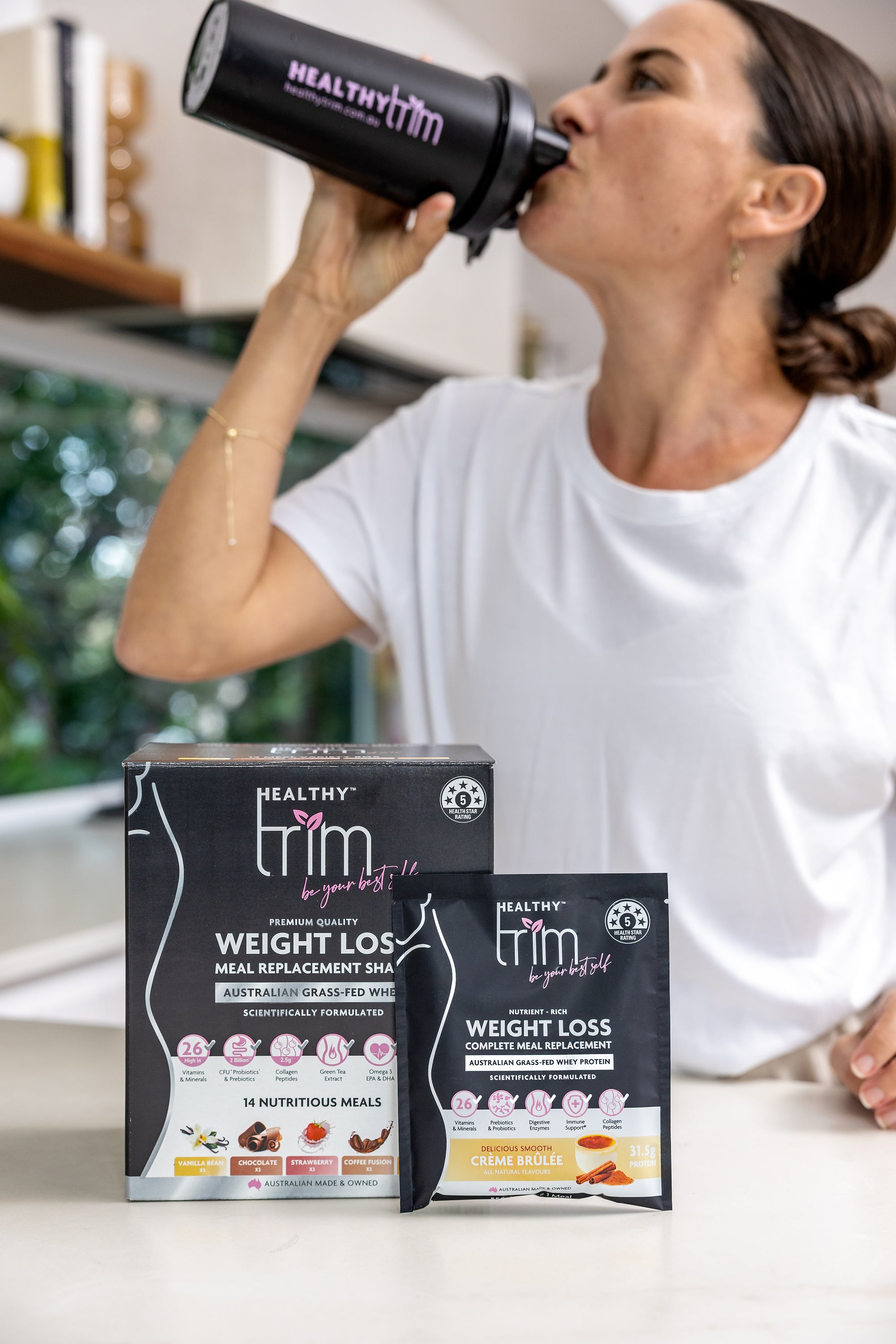
If you are looking for a high-protein meal replacement for weight control shake, Healthy Trim delivers 31.5g of whey protein sourced from Australian grass-fed cows in every serve, alongside 6g of dietary fibre, 2 billion CFU of gut-supporting probiotics, and 26 essential vitamins and minerals - complete nutrition, not just a protein hit.
If you'd like to try our products, browse our website to find out more.





Your cart is currently empty.